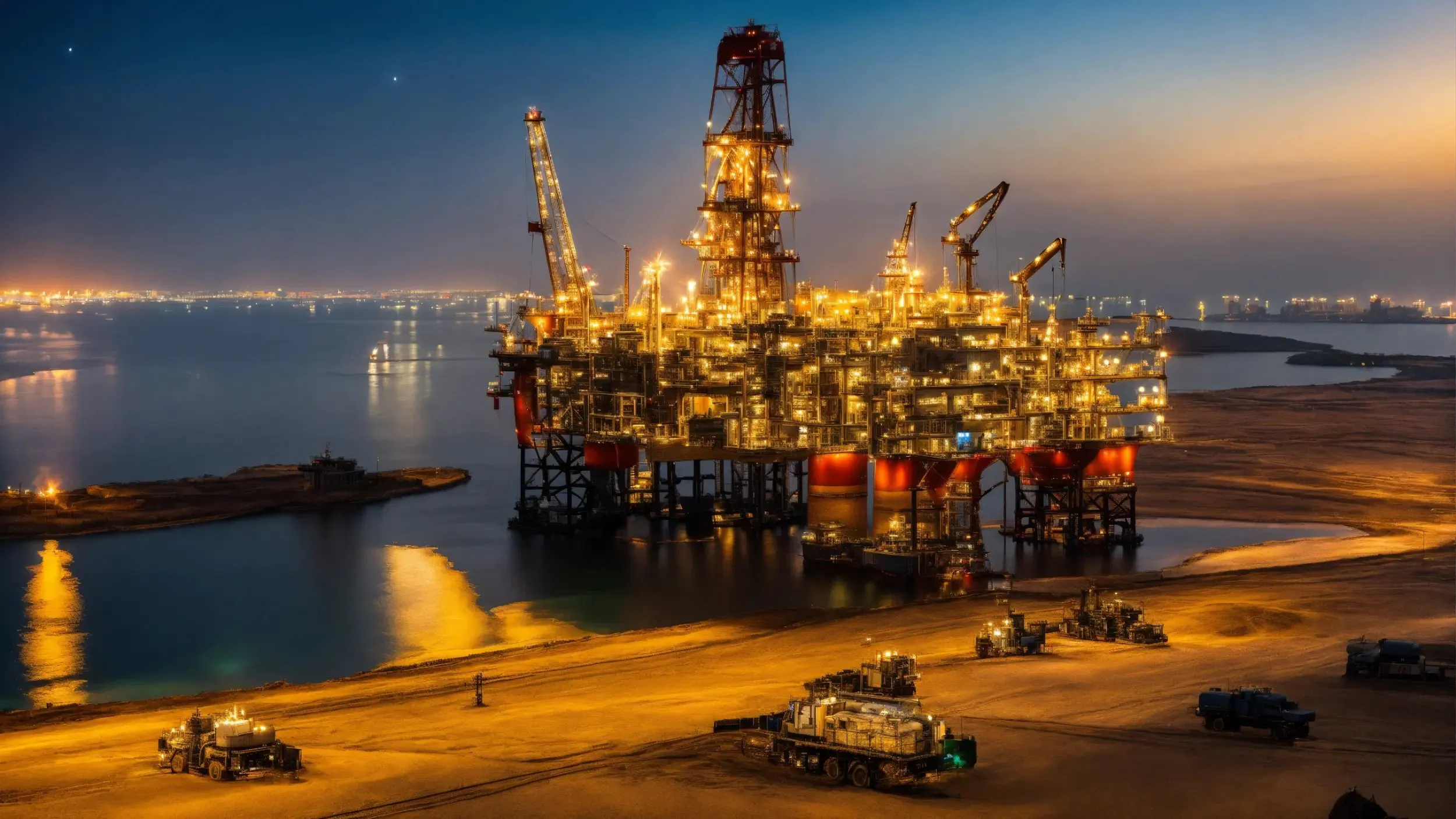
From the Well to the Neural Network: The Future of Oil & Gas with AI in 2026
Artificial Intelligence has moved beyond the experimental stage in the oil and gas industry and, by 2026, is becoming an integral part of core operations. Companies are shifting from isolated pilot projects to large-scale AI deployments that span the entire value chain — from exploration and drilling to production, processing, and logistics. Against a backdrop of market volatility, tightening industrial safety requirements, and increasing pressure to meet sustainability goals, AI is emerging as a critical tool for improving efficiency and reducing operational risk.
The year 2026 marks a turning point at which machine learning, digital twins of reservoirs and assets, autonomous control systems, and predictive analytics reach industrial-scale maturity. Neural networks are increasingly making real-time decisions, optimizing equipment performance, forecasting failures, and enabling engineers to manage rapidly growing volumes of data. At the same time, the focus is shifting away from experimentation toward measurable business outcomes and the systematic integration of AI into enterprise processes.
This article examines the key trends shaping the application of artificial intelligence in the oil and gas sector in 2026, explores the most mature and high-impact use cases, and assesses how the transition “from the well to the neural network” is redefining asset management, workforce operations, and strategic planning across the industry.
How long has AI been used in the oil and gas industry — and how has it been transformative?
Artificial Intelligence began gaining traction in the oil and gas industry in the mid-2010s, initially through machine learning applications for seismic interpretation, reservoir modeling, and drilling optimization. At that stage, AI was primarily used to process vast datasets that were difficult or impossible to analyze manually. By the early 2020s, however, AI evolved into a core predictive and decision-support tool, enabling operators to anticipate equipment failures, reduce non-productive time, and optimize production performance.
According to Boston Consulting Group (BCG), AI-driven solutions have enabled oil and gas companies to shorten key operational cycles from months to weeks and reduce operating costs by approximately 15–20%, a significant impact in a capital-intensive industry. As reported in McKinsey Global Institute analyzes, predictive analytics alone can lower maintenance costs by up to 25% while improving asset availability.
By 2025, AI had moved well beyond pilot programs. It became embedded across exploration, production, midstream logistics, safety monitoring, and environmental risk management. This shift fundamentally changed how companies approach operational efficiency, cost control, and data-driven decision-making at scale.
What approaches were used previously — and what changed in 2025?
Early AI adoption in oil and gas focused on relatively isolated use cases, including:
- Seismic Data Interpretation to identify promising drilling targets
- Predictive maintenance based on sensor data such as vibration, pressure, and temperature
- Logistics and supply chain optimization using statistical and rule-based models
While these approaches delivered measurable value, they were typically siloed and lacked integration into enterprise-wide digital strategies.
A major shift occurred in 2025, when companies began combining AI with IoT, cloud platforms, advanced analytics, and digital twins. This convergence enabled real-time operational intelligence and automated decision-making. According to McKinsey & Company, integrated AI systems can reduce operating expenditures by up to 20% and increase production efficiency by 5–8% across upstream and downstream operations.
At the same time, regulatory pressure and ESG commitments pushed AI adoption into new areas such as emissions monitoring, environmental impact assessment, and industrial safety — domains that had previously received limited digital investment.
What will be used in 2026?
By 2026, AI will be deeply embedded across the oil and gas value chain and increasingly treated as a strategic infrastructure rather than a standalone technology. Key developments will include:
- Advanced geospatial intelligence combined with environmental and geological modeling;
- Autonomous and semi-autonomous drilling and production systems;
- High-fidelity digital twins for assets, reservoirs, and entire fields;
- Next-generation predictive and generative AI models for production forecasting and supply-chain resilience.
As noted by Olga González, Founder & CEO, Pietra Communications:
“The most in-demand AI applications will be those tied to geospatial intelligence, predictive maintenance, and resource optimization, especially as the race for geo-based data accelerates. Companies are moving beyond using AI simply to increase efficiency and are instead demanding systems that can deliver real-time environmental modeling, risk forecasting, and supply chain resilience while operating within stricter regulatory and public scrutiny frameworks.
What will distinguish leading AI implementations in oil and gas is not just technical sophistication, but transparency and governance. As AI becomes embedded in exploration, safety monitoring, and emissions tracking, stakeholders will expect clear explanations of how data is sourced, how models make decisions, and how outcomes are audited. In 2026, AI tools that can integrate geospatial data with environmental impact metrics and compliance reporting will be far more valuable than black-box optimization engines.”
This perspective aligns with findings from the World Economic Forum, which emphasizes explainability, governance, and trust as critical success factors for industrial AI adoption.
How Usetech applies AI in the oil and gas sector
Usetech actively applies artificial intelligence and advanced analytics to address real-world challenges across the oil and gas industry. Key areas of focus include:
Predictive analytics and operational optimization
Usetech has developed decision-support systems that help operators reduce fuel consumption by up to 5% per day while improving output quality and operational stability.
Geospatial intelligence and subsurface modeling
The company delivers AI-powered 3D modeling and simulation solutions for hydrocarbon exploration, enabling more accurate identification of reserves and improved drilling success rates.
Monitoring, visualization, and digital asset management
Usetech leverages AI for real-time monitoring, automated anomaly detection, and 3D visualization of industrial assets, supporting proactive maintenance and long-term infrastructure planning.
These capabilities have positioned Usetech as a recognized technology partner in the energy sector, including shortlisting at the Oil & Gas Middle East Awards 2025 for excellence in AI-driven operational solutions.
Conclusion
Artificial Intelligence has become a defining force in the transformation of the oil and gas industry. What began as task-level automation has evolved into enterprise-wide intelligence shaping operational decisions, risk management, and sustainability strategies. By 2026, AI will no longer be optional — it will be foundational to competitiveness.
Organizations that successfully integrate AI with geospatial data, environmental intelligence, and transparent governance frameworks will gain a decisive advantage in efficiency, compliance, and resilience. Industry examples, including implementations by companies such as Usetech, demonstrate that AI is already delivering measurable business value — from resource optimization to enhanced safety and environmental performance.