Rystad Energy estimates that AI and digitalization will generate $500 billion in cumulative value for E&P companies between 2026 and 2030, with operations and maintenance as the fastest-adopting workflow category. S&P Global forecasts average Brent at $58 per barrel in 2026 — down 16% from 2025 — which makes maintenance cost reduction a direct margin question for MENA operators. The calculator in this article translates published 2025–2026 benchmarks from Deloitte and McKinsey into a facility-specific annual savings estimate — a defensible starting number for investment conversations.
Why Maintenance Cost Reduction Is a Board-Level Priority in MENA Energy Right Now
S&P Global’s January 2026 outlook projects average Brent crude at $58 per barrel for 2026, a 16% decline from 2025 projections. At the same time, OPEC+ nations have increased output to regain market share — meaning higher production volumes need to run on tighter cost structures.
In that environment, maintenance spending becomes one of the most actionable cost levers available. Maintenance accounts for roughly 20% of total OpEx in oil and gas operations. GitNux research estimates reactive maintenance costs 3–5 times more than planned maintenance over an asset’s lifetime. The financial argument for shifting from reactive to predictive maintenance holds across price scenarios — it does not depend on a recovery in oil prices.
Deloitte’s 2026 Oil and Gas Industry Outlook identifies digitally enabled operations as the next frontier for competitiveness in the sector, noting that early adopters of AI-driven maintenance systems have reported up to 40% fewer equipment failures and annual savings of $10 million per implementation. Rystad Energy’s May 2026 analysis places operations and maintenance as the second-largest value pool in the cumulative $500 billion opportunity, with predictive maintenance and remote operations delivering the largest and fastest-realised returns among adopting E&P companies.
What Predictive Maintenance Changes in Operations
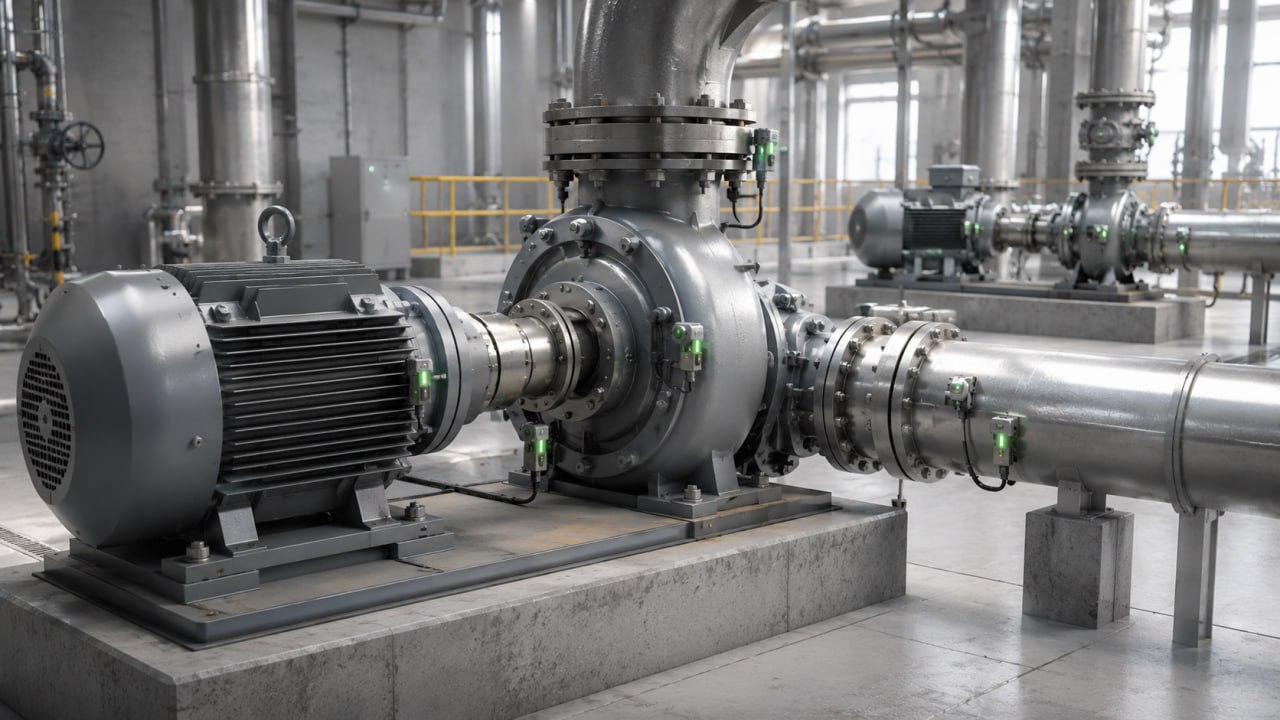
Predictive maintenance uses continuous sensor monitoring — vibration, temperature, pressure, flow rate — combined with machine learning models to detect anomalies before they produce failures. The operational shift is from scheduled or reactive maintenance to condition-based maintenance: equipment receives attention when data indicates it needs it, not on a fixed calendar or after a breakdown.
The financial impact runs across three categories.
Unplanned downtime reduction. Deloitte’s Predictive Maintenance Position Paper documents 10–20% uptime improvement as the conservative baseline figure for budget reviews. McKinsey’s 2025–2026 research documents 30–50% downtime reduction at mature programs with strong data foundations. Deloitte’s 2026 Oil and Gas Outlook cites implementations where predictive algorithms prevented more than 140 hours of downtime, delivering measurable OpEx savings.
Maintenance cost reduction. Deloitte’s Position Paper puts overall maintenance cost reduction at 5–10% — the figure Deloitte recommends for CFO-level budget reviews because it carries clear source attribution and names a defined baseline. McKinsey’s mid-range figure is 18–25% maintenance cost reduction compared to preventive approaches, and up to 40% versus reactive maintenance. ADNOC’s documented implementation across hundreds of machines produced a 20% maintenance cost reduction and a measurable reduction in unplanned stoppages — placing it between the Deloitte conservative and McKinsey mid-range figures.
Asset life extension. McKinsey’s research documents 20–40% extension in asset useful life with effective predictive maintenance programs. For capital-intensive MENA oil and gas facilities where critical equipment carries replacement costs in the tens of millions, deferring replacement by two to three years per asset produces material capital budget impact.
The ROI Case in MENA: What Regional Data Shows
MENA oil and gas operations produce some of the most directly documented predictive maintenance ROI cases globally.
ADNOC’s deployment across hundreds of machines produced a 20% maintenance cost reduction and a measurable reduction in unplanned stoppages. ADNOC’s broader digital commitment — $1.5 billion in digital capital expenditure targeting $1 billion in annual value creation — reflects the return the organization demonstrates from operational AI at scale.
Shell’s AI-driven predictive maintenance program across global upstream and downstream operations — powered by C3.ai and Microsoft Azure — improved average asset uptime from 93% to 98% and reduced equipment failure-related safety incidents by 15%. A Deloitte 2025 analysis cited by the Shell case study found that approximately 35% of refinery downtime is unplanned, and that 70% of those incidents could be prevented with better data analytics.
McKinsey confirms AI predictive maintenance delivers ROI within 2–6 months in oil and gas implementations, with documented implementations at Shell, BP, ADNOC, and PETRONAS showing measurable improvements across maintenance cost per barrel, MTBF, MTTR, and overall equipment effectiveness. IoT Analytics found that 95% of predictive maintenance adopters report positive returns overall, with approximately 27% reaching payback within 12 months.
The financial case for predictive maintenance in MENA oil and gas is strongest when it starts from conservative figures. Deloitte and McKinsey benchmarks applied to actual asset count and maintenance spend produce a more defensible business case than best-case industry averages.
Calculate Your Predictive Maintenance ROI
Enter your facility’s asset count, failure frequency, downtime per failure, and annual maintenance spend. The calculator applies published 2025–2026 benchmarks from Deloitte and McKinsey to produce annual savings estimates across two categories: maintenance cost reduction and downtime cost avoidance.
Predictive Maintenance ROI Calculator
Enter your facility parameters to estimate annual savings from shifting to AI-driven predictive maintenance. Conservative benchmarks from Deloitte (2025) and McKinsey (2025–2026) applied to your numbers.
Facility parameters
Estimated annual savings
Maintenance cost saving
—
per year
Downtime cost saving
—
per year
Total estimated saving
—
combined annual
Failures avoided per year
—
at applied downtime reduction rate
Downtime hours recovered
—
per year
Sources: Deloitte Insights, Predictive Maintenance Position Paper (2025) — conservative: 5–10% maintenance cost reduction, 10–20% downtime reduction. McKinsey & Company, Analytics-Based Maintenance Strategy (2025–2026) — mid-range: 18–25% maintenance cost reduction, 30–50% downtime reduction. Estimates are directional — actual results depend on asset criticality, data quality, and implementation maturity.
Conservative benchmarks: Deloitte Predictive Maintenance Position Paper (5–10% maintenance cost reduction, 10–20% uptime improvement). McKinsey & Company, Analytics-Based Maintenance Strategy (2025–2026) (18–25% maintenance cost reduction, 30–50% downtime reduction). Actual results depend on asset criticality, data quality, and implementation maturity.
What the Benchmarks Mean in Practice
The spread between conservative and optimistic predictive maintenance ROI figures in published research is wide — from Deloitte’s 5–10% maintenance cost reduction to McKinsey’s 18–25%. Three factors determine where a specific implementation lands in that range.
Starting maintenance strategy. Organizations currently running reactive maintenance see the largest gains, because the baseline cost is highest. Facilities running reactive maintenance as their primary strategy pay 3–5 times more in lifetime maintenance costs than those running planned approaches. Organizations already running mature preventive maintenance programs see smaller incremental improvements from the shift to predictive. In 2025, 71% of maintenance professionals still used preventive maintenance as their primary strategy, with AI adoption at 27% — indicating that most MENA facilities starting now are moving from preventive, not reactive baselines.
Asset criticality and failure cost. Predictive maintenance produces the highest returns on assets where failure is most expensive. In oil and gas, that means rotating equipment — compressors, pumps, turbines — where failure causes production loss, creates safety exposure, and triggers emergency repair costs simultaneously. AI systems covering high-criticality assets achieve failure prediction lead times of 7 or more days versus 1–2 days for reactive detection — the difference between a planned repair and an emergency shutdown.
Data quality and model maturity. AI models require 6–12 months of operational data to achieve reliable predictive accuracy. Organizations with established sensor infrastructure and historical maintenance records reach mature model performance faster. Industry leaders reach 90–95% predictive accuracy on well-instrumented critical assets with sufficient historical data. The 2025 State of Industrial Maintenance found that 74% of maintenance leads reported equal or less unscheduled downtime in 2025 — a figure that reflects the improving baseline as more facilities reach model maturity.
The Data Integration Prerequisite for MENA Deployments
Predictive maintenance in oil and gas depends on sensor data from critical equipment reaching an AI monitoring platform reliably and in real time. In MENA oil and gas environments — which often combine legacy OT infrastructure, geographically distributed assets, and multiple vendor systems — the integration architecture between sensors, SCADA systems, and AI platforms determines whether a predictive maintenance deployment achieves its projected savings.
Rystad Energy notes that AI models in upstream oil and gas are trained on equipment and workflow-specific data, and that training data takes years to accumulate — with models rarely transferring across assets without significant rework. For MENA operators with multiple facility types and equipment generations, this means predictive maintenance architecture needs to account for asset-specific model training rather than assuming a single model covers all equipment.
The operational data that feeds predictive models — vibration readings, temperature trends, pressure histories, maintenance records — frequently sits across systems that do not exchange data in real time. Deloitte’s 2026 Oil and Gas Outlook identifies this integration gap directly: shifting toward prescriptive and self-healing maintenance requires first addressing the data and connectivity layer that connects OT systems to AI platforms. Addressing that integration before deploying predictive analytics determines how quickly models reach useful accuracy and how completely the facility’s critical asset base gets covered.
Key Benchmarks: Predictive Maintenance in Oil and Gas (2025–2026)
Deloitte’s conservative maintenance cost reduction: 5–10% — the figure Deloitte recommends for CFO-level budget reviews.
McKinsey’s documented maintenance cost reduction: 18–25% versus preventive, up to 40% versus reactive — achieved at mature programs with strong data foundations.
Deloitte’s conservative uptime improvement: 10–20%. McKinsey’s documented downtime reduction: 30–50% at mature implementations.
McKinsey’s documented asset life extension: 20–40%.
ADNOC implementation: 20% maintenance cost reduction, measurable reduction in unplanned stoppages.
ROI timeline: 2–6 months for initial returns in oil and gas, per McKinsey and Deloitte.
95% of predictive maintenance adopters report positive returns; 27% reach payback within 12 months (IoT Analytics).
Rystad Energy cumulative E&P value from AI and digitalization (2026–2030): $500 billion, with operations and maintenance as a primary value driver.
What This Means for MENA Operations and Finance Leaders
Use conservative benchmarks for the investment case. Deloitte’s 5–10% maintenance cost reduction and 10–20% uptime improvement carry clear source attribution and hold up in budget reviews. McKinsey’s higher figures describe mature programs — use them as a ceiling, not a baseline, for initial projections on a first deployment.
Prioritize high-criticality rotating equipment. Compressors, pumps, and turbines in oil and gas carry the highest failure costs and produce the fastest predictive maintenance ROI. Starting with these assets and expanding to broader coverage produces earlier returns and builds the data foundation for wider deployment.
Address data integration before model selection. Deloitte’s 2026 Oil and Gas Outlook identifies the connectivity and data layer as the prerequisite for shifting toward prescriptive and self-healing maintenance. For MENA oil and gas facilities with legacy OT infrastructure and distributed assets, mapping the data flows from critical equipment to the AI platform is the first step — not a parallel workstream.
Factor oil price context into the ROI calculation. At $58 per barrel, a 10% reduction in maintenance spend contributes more to operating margin than at higher price levels. The calculator below lets operations and finance leaders run that calculation on their facility’s actual maintenance spend rather than on an industry average.
FAQ: Predictive Maintenance ROI in MENA Oil and Gas
Conservative benchmarks from Deloitte’s Predictive Maintenance Position Paper point to 5–10% maintenance cost reduction and 10–20% uptime improvement. McKinsey’s figures for mature implementations run higher: 18–25% maintenance cost reduction and 30–50% downtime reduction. ADNOC’s documented implementation produced a 20% maintenance cost reduction — between the Deloitte conservative and McKinsey mid-range figures. The appropriate baseline for a specific facility depends on the starting maintenance strategy, asset criticality profile, and data infrastructure in place.
McKinsey and Deloitte both document ROI timelines of 2–6 months for initial returns in oil and gas implementations. IoT Analytics found that 27% of adopters reach full payback within 12 months. Model accuracy typically requires 6–12 months of operational data to mature — meaning early returns come from the most straightforward failure modes on well-instrumented equipment, with broader coverage expanding as models develop.
The core data requirements are: continuous sensor readings from critical equipment (vibration, temperature, pressure, flow), historical maintenance records showing failure modes and repair histories, operational context data (load levels, production rates, environmental conditions), and reliable data transmission from OT systems to the AI platform. Facilities with established sensor infrastructure and documented maintenance histories reach useful model accuracy within 6–12 months. Those starting from fragmented baselines take longer.
Lower oil prices compress operating margins, which increases the relative financial impact of maintenance cost reduction. At $58 per barrel, a 10% reduction in maintenance spend contributes more meaningfully to operating margin than at $80 per barrel. The investment case for predictive maintenance holds across price scenarios — savings come from operational cost reduction rather than revenue expansion.
About Usetech
Usetech is a technology company focused on practical digital transformation for enterprise and strategic-sector environments across MENA. Usetech helps organizations improve operational control, infrastructure efficiency, data integration, and decision speed through AI, data, and engineering solutions adapted to real regional conditions. Core focus areas include AI and operational platforms, infrastructure optimization, data integration and enterprise connectivity, smart industry and digital operations, and strategic technology consulting for MENA growth environments.