
How Machine Learning Supports Data Centre Optimisation
Learn how machine learning supports VM rightsizing, workload forecasting, capacity planning, and resource optimization in enterprise data centres with Octopus.
When an application slows down, adding CPU or memory can seem like the obvious response. Yet the same data centre may contain oversized virtual machines, inactive instances and hosts with spare capacity. The immediate problem is deciding which resources to resize, move or reserve before committing to more hardware.
Machine learning for data centre optimisation uses historical workload data to support these decisions. It helps infrastructure teams assess resource pressure, anticipate demand and evaluate changes to allocation. Its value depends on connecting that analysis to the topology of the environment and the rules governing changes.
For CIOs, CTOs and infrastructure teams, this creates a practical sequence: establish the current position, identify the constraint, assess possible changes and verify their effect. The scope here is resource management across virtual workloads, physical hosts and connected storage within an organisation’s data centre. Load balancing refers to the placement of workloads across hosts.
How workload data becomes an optimisation recommendation
A utilisation dashboard shows how much a system consumes. An actionable recommendation also needs context: the host running a workload, capacity available elsewhere and the constraints on moving it.
Octopus combines topology and utilisation information to analyse resource imbalances and recommend changes. Its workflow moves from collecting metrics to recognising workload patterns, assessing current conditions, forecasting demand and proposing optimisation actions.
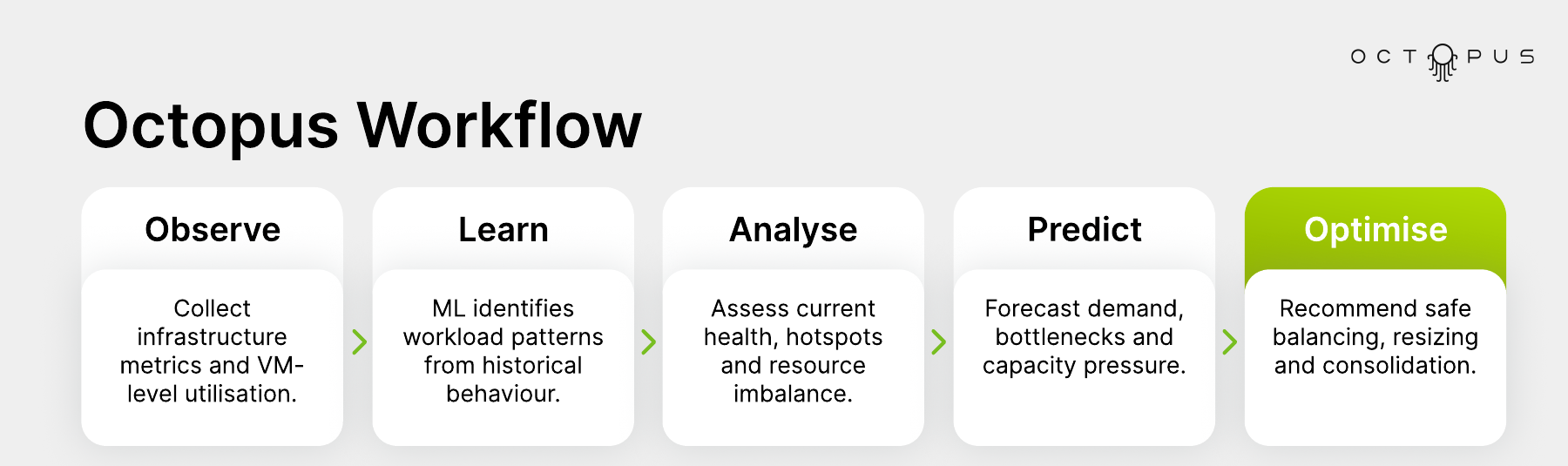
Figure 1. Octopus connects historical workload analysis with capacity forecasts and recommendations for balancing, resizing and consolidation.
This sequence matters because a forecast alone does not tell an administrator what to do. A proposed VM move needs a suitable destination. A resizing recommendation needs to reflect consumption history and the operating constraints of the environment.
Rightsizing starts with individual resources
CPU and memory demand do not necessarily move together. A VM can have low CPU utilisation while its memory requirements increase. In that situation, increasing its entire configuration would allocate more of a resource it already has in excess.
VM rightsizing adjusts each resource to the workload’s requirements. The example below recommends releasing two CPU cores while increasing memory. It illustrates how the same workload can require different decisions for CPU and RAM.

Figure 2. CPU and memory recommendations for one VM in an illustrative environment. The proposed changes are specific to this workload and are not a general sizing rule.
Inactive VMs and unattached storage volumes are another source of potentially recoverable capacity. Octopus uses utilisation and connectivity information to identify candidates for suspension or removal. Production decisions still require checks on ownership, retention requirements and dependencies. Low activity alone is insufficient evidence that a system can be retired.
Capacity forecasts should identify the resource that runs out first
A cluster can have sufficient CPU capacity while approaching a memory limit. Treating capacity as a single aggregate figure can obscure the constraint that will affect the next workload.
Predictive capacity planning examines resource trends separately. Octopus brings together current utilisation, historical changes and predicted demand so that teams can assess where pressure is developing. The useful output is an understanding of which resource needs attention and whether redistribution or rightsizing can address the shortfall.
The planning horizon should reflect the decision being made, such as accommodating an application release or preparing a hardware purchase. Forecasts also depend on the workloads represented in the historical data. Teams should review them when planned applications or changes in usage introduce demands that the history does not capture.
For a broader explanation of this process, read our guide to data centre capacity planning in MENA.
Test new workloads before committing to expansion
What-if analysis helps teams assess a proposed change before deploying it. A plan can include new VMs, additional storage or a physical host, with the resulting resource requirements evaluated against the selected infrastructure.
In the example below, a plan to add 50 VMs identifies a need for another physical host. This makes the investment decision more specific: the team can examine the additional resources required and the proposed placement of the workloads.
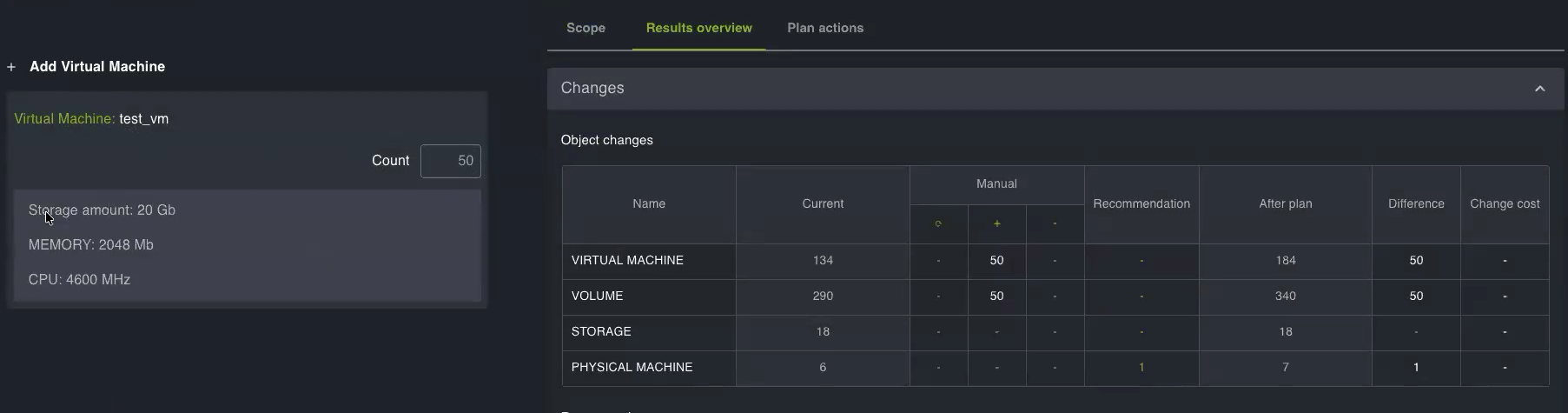
Figure 3. An illustrative plan for 50 additional VMs identifies a requirement for another physical host. This is a modelled scenario, not a completed deployment or a customer result.
The model supports an implementation decision. Administrators still need to provision the approved resources and carry out the deployment. Depending on the scenario, the analysis may reveal recoverable capacity or confirm that hardware expansion is necessary.
Automation needs permissions and maintenance windows
An assessment can begin with read-only access. Octopus can collect infrastructure information, analyse it and produce recommendations without permission to change the environment. Executing an action requires the appropriate administrator permissions.
Where execution is enabled, teams can review individual recommendations or configure automation through policies. A policy can, for example, retain manual approval for VM moves while allowing resource increases for a selected group of machines.
Change timing is part of the decision. Reducing allocated memory can require a VM shutdown, reconfiguration and restart, depending on the platform and configuration. Live migration has different requirements. Teams need to confirm what the relevant hypervisor API supports before deciding whether an action can run without interruption.
Scheduling controls allow disruptive operations to be assigned to maintenance windows, while action history records execution and status. Useful automation therefore combines a resource recommendation with clear authority, timing and a record of what happened.
Measure recovered capacity and financial value separately
Releasing allocated CPU or memory creates potential capacity for other workloads. Its financial value depends on the organisation’s operating and purchasing model.
Octopus can express resource recommendations as estimated savings using configured cost inputs. In an on-premises environment, these estimates need to be assessed alongside actual spending decisions, such as a hardware purchase that can be deferred. A reduction in allocated resources does not automatically produce an equivalent reduction in the next bill.
For outcome measurement, agree the scope and baseline first. Compare resource pressure and available capacity before and after approved changes, and assess financial outcomes using the organisation’s own costs and purchasing decisions.
A published Octopus case study reports a 40% reduction in resource deficit and a 30% increase in infrastructure efficiency at a large government infrastructure organisation. These are project-specific results; outcomes elsewhere depend on workloads, constraints and the scope of optimisation.
Why capacity efficiency matters for MENA infrastructure teams
In its August 2025 forecast, Gartner projected spending on data centre systems in MENA to reach almost $13 billion in 2026, an increase of 37.3% over 2025. This is a market spending forecast rather than a measure of utilisation within individual data centres.
For organisations operating their own infrastructure, expansion decisions still require a workload-level assessment. Reviewing allocations and forecasting demand helps establish what existing hardware can support and where additional capacity is necessary. That distinction gives infrastructure teams a clearer basis for investment.
Check deployment fit before starting an assessment
Octopus runs inside the customer’s infrastructure and can operate in an air-gapped environment, with analysis performed locally. Before an assessment, teams should confirm platform versions, available metrics, access permissions and restrictions on changes. Compatibility needs to be checked for the intended deployment.
A useful starting point is to identify the resource constraint or planned workload to assess, define the infrastructure in scope and agree how the outcome will be measured. Read-only analysis can then provide recommendations for technical review before changes are approved.
For a technical walkthrough of rightsizing, capacity forecasts and what-if planning, watch the Octopus webinar recording and access the presentation. The session shows how these decisions work in the platform interface. You can also explore the Octopus platform.
Usetech offers a free infrastructure health assessment with Octopus for qualifying organisations operating their own data centres. A brief introductory call helps our team understand the environment and confirm whether the platform can provide useful insight. To request an assessment or a one-to-one discussion, submit the form on the recording page.